





| Product name | chlorpromazine |
|---|
| Product number | - |
|---|---|
| Other names | Esmind |
| Identified uses | For industry use only. Veterinary Drug: TRANQUILLIZING_AGENT |
|---|---|
| Uses advised against | no data available |
| Company | MOLBASE (Shanghai) Biotechnology Co., Ltd. |
|---|---|
| Address | Floor 4 & 5, Building 12, No. 1001 North Qinzhou Road, Xuhui District, Shanghai, China |
| Telephone | +86(21)64956998 |
| Fax | +86(21)54365166 |
| Emergency phone number | +86-400-6021-666 |
|---|---|
| Service hours | Monday to Friday, 9am-5pm (Standard time zone: UTC/GMT +8 hours). |
Acute toxicity - Oral, Category 3
Skin sensitization, Category 1
Acute toxicity - Inhalation, Category 3
Reproductive toxicity, Additional category for effects on or via lactation
Hazardous to the aquatic environment, long-term (Chronic) - Category Chronic 1
2.2 GHS label elements, including precautionary statements| Pictogram(s) | 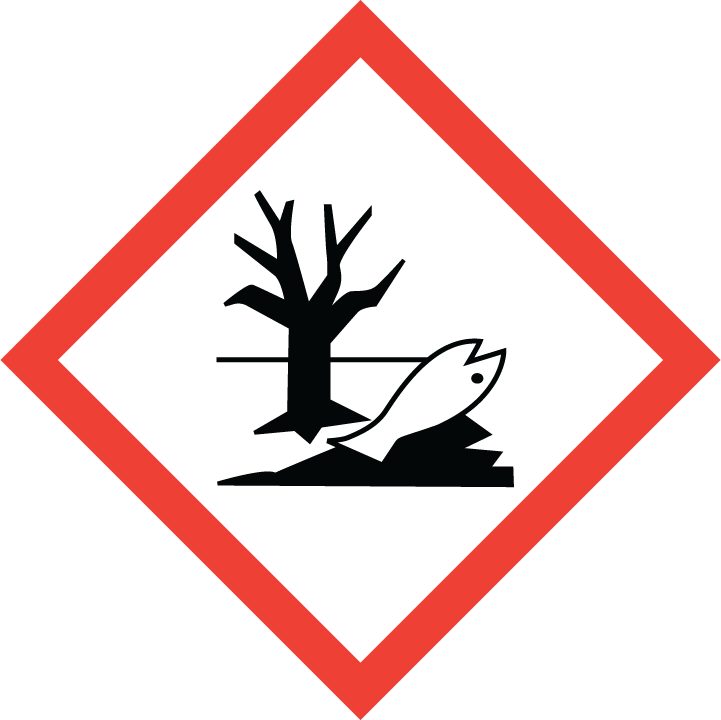 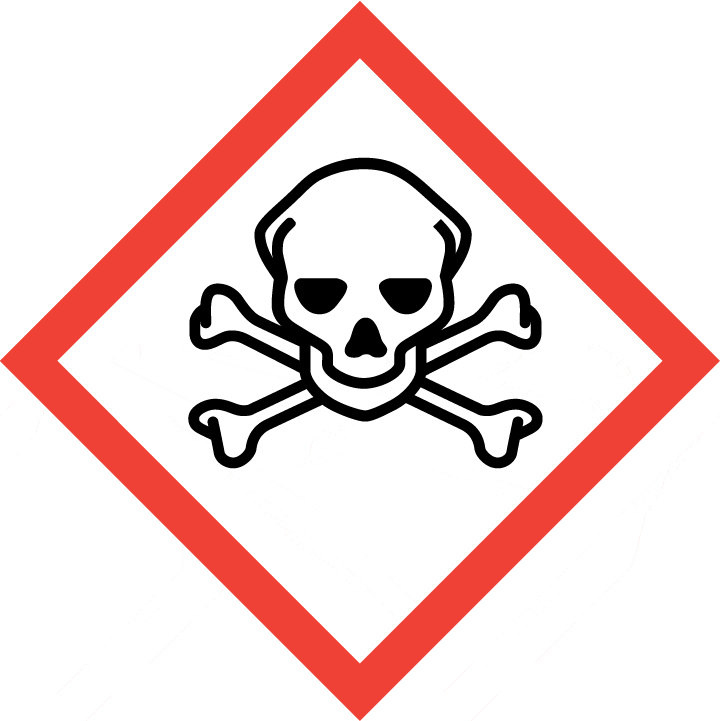 |
|---|---|
| Signal word | Danger |
| Hazard statement(s) | H301 Toxic if swallowed H317 May cause an allergic skin reaction H331 Toxic if inhaled H362 May cause harm to breast-fed children H410 Very toxic to aquatic life with long lasting effects |
| Precautionary statement(s) | |
| Prevention | P264 Wash ... thoroughly after handling. P270 Do not eat, drink or smoke when using this product. P261 Avoid breathing dust/fume/gas/mist/vapours/spray. P272 Contaminated work clothing should not be allowed out of the workplace. P280 Wear protective gloves/protective clothing/eye protection/face protection. P271 Use only outdoors or in a well-ventilated area. P201 Obtain special instructions before use. P260 Do not breathe dust/fume/gas/mist/vapours/spray. P263 Avoid contact during pregnancy and while nursing. P273 Avoid release to the environment. |
| Response | P301+P310 IF SWALLOWED: Immediately call a POISON CENTER/doctor/… P321 Specific treatment (see ... on this label). P330 Rinse mouth. P302+P352 IF ON SKIN: Wash with plenty of water/... P333+P313 If skin irritation or rash occurs: Get medical advice/attention. P362+P364 Take off contaminated clothing and wash it before reuse. P304+P340 IF INHALED: Remove person to fresh air and keep comfortable for breathing. P311 Call a POISON CENTER/doctor/… P308+P313 IF exposed or concerned: Get medical advice/ attention. P391 Collect spillage. |
| Storage | P405 Store locked up. P403+P233 Store in a well-ventilated place. Keep container tightly closed. |
| Disposal | P501 Dispose of contents/container to ... |
none
3.Composition/information on ingredients 3.1 Substances| Chemical name | Common names and synonyms | CAS number | EC number | Concentration |
|---|---|---|---|---|
| chlorpromazine | chlorpromazine | 50-53-3 | none | 100% |
Consult a physician. Show this safety data sheet to the doctor in attendance.
If inhaledIf breathed in, move person into fresh air. If not breathing, give artificial respiration. Consult a physician.
In case of skin contactWash off with soap and plenty of water. Consult a physician.
In case of eye contactRinse thoroughly with plenty of water for at least 15 minutes and consult a physician.
If swallowedNever give anything by mouth to an unconscious person. Rinse mouth with water. Consult a physician.
4.2 Most important symptoms/effects, acute and delayedno data available
4.3 Indication of immediate medical attention and special treatment needed, if necessaryCardiovascular monitoring should begin immediately and should include continuous ECG monitoring to detect possible arrhythmias. Treatment may include correction of electrolyte abnormalities and acid-base balance, lidocaine, phenytoin, isoproterenol, ventricular pacing, and defibrillation. Antiarrhythmic agents that can prolong the QT interval (eg, class IA [disopyramide, procainamide, quinidine] or III agents) should be avoided in treating overdosage-associated arrhythmias in which prolongation of QTc is a manifestation. Appropriate therapy (IV fluids and a vasopressor) should be instituted if hypotension occurs; epinephrine, bretylium, or dopamine should not be used. For the management of refractory hypotension, vasopressors such as phenylephrine, levarterenol, or metaraminol may be used. Appropriate therapy should be instituted if excessive sedation occurs; CNS stimulants that may cause seizures should be avoided. If seizures occur, treatment should not include barbiturates because these drugs may potentiate phenothiazine-induced respiratory depression. Hypothermia is common and sometimes difficult to control. In some patients with acute toxicity, exchange transfusions may be useful, but hemodialysis, forced diuresis, hemoperfusion, or manipulation of urine pH is of little value in enhancing elimination of phenothiazines. /Phenothiazine General Statement/
5.Fire-fighting measures 5.1 Extinguishing media Suitable extinguishing mediaWater spray, dry chemical, carbon dioxide or foam as appropriate for surrounding fire and materials.
5.2 Specific hazards arising from the chemicalno data available
5.3 Special protective actions for fire-fightersWear self-contained breathing apparatus for firefighting if necessary.
6.Accidental release measures 6.1 Personal precautions, protective equipment and emergency proceduresUse personal protective equipment. Avoid dust formation. Avoid breathing vapours, mist or gas. Ensure adequate ventilation. Evacuate personnel to safe areas. Avoid breathing dust. For personal protection see section 8.
6.2 Environmental precautionsPrevent further leakage or spillage if safe to do so. Do not let product enter drains. Discharge into the environment must be avoided.
6.3 Methods and materials for containment and cleaning upWear approved respiratory protection, chemically compatible gloves and protective clothing. Wipe up spillage or collect spillage using a high efficiency vacuum cleaner. Avoid breathing dust. Place spillage in appropriately labeled container for disposal. Wash spill site.
7.Handling and storage 7.1 Precautions for safe handlingAvoid contact with skin and eyes. Avoid formation of dust and aerosols. Avoid exposure - obtain special instructions before use.Provide appropriate exhaust ventilation at places where dust is formed. For precautions see section 2.2.
7.2 Conditions for safe storage, including any incompatibilitiesChlorpromazine hydrochloride oral solutions, tablets, and injection should be stored at a temperature less than 40°C, preferably between 15-30°C; freezing of the oral solutions and injection should be avoided. ... Chlorpromazine suppositories should be stored in well-closed containers between 15-30°C. ...Chlorpromazine hydrochloride oral concentrate solution should be dispensed in amber glass bottles.
8.Exposure controls/personal protection 8.1 Control parameters Occupational Exposure limit valuesno data available
Biological limit valuesno data available
8.2 Appropriate engineering controlsHandle in accordance with good industrial hygiene and safety practice. Wash hands before breaks and at the end of workday.
8.3 Individual protection measures, such as personal protective equipment (PPE) Eye/face protectionSafety glasses with side-shields conforming to EN166. Use equipment for eye protection tested and approved under appropriate government standards such as NIOSH (US) or EN 166(EU).
Skin protectionWear impervious clothing. The type of protective equipment must be selected according to the concentration and amount of the dangerous substance at the specific workplace. Handle with gloves. Gloves must be inspected prior to use. Use proper glove removal technique(without touching glove's outer surface) to avoid skin contact with this product. Dispose of contaminated gloves after use in accordance with applicable laws and good laboratory practices. Wash and dry hands. The selected protective gloves have to satisfy the specifications of EU Directive 89/686/EEC and the standard EN 374 derived from it.
Respiratory protectionWear dust mask when handling large quantities.
Thermal hazardsno data available
9.Physical and chemical properties| Physical state | white to off-white crystalline powder |
|---|---|
| Colour | Oily liquid |
| Odour | Amine odor |
| Melting point/ freezing point | 192 - 196ºC (decomposes) |
| Boiling point or initial boiling point and boiling range | 450.1ºC at 760mmHg |
| Flammability | no data available |
| Lower and upper explosion limit / flammability limit | no data available |
| Flash point | 226ºC |
| Auto-ignition temperature | no data available |
| Decomposition temperature | no data available |
| pH | Alkaline reaction |
| Kinematic viscosity | no data available |
| Solubility | no data available |
| Partition coefficient n-octanol/water (log value) | no data available |
| Vapour pressure | 5.17X10⁻⁶ mm Hg at 25°C (est) |
| Density and/or relative density | 1.212g/cm3 |
| Relative vapour density | no data available |
| Particle characteristics | no data available |
no data available
10.2 Chemical stabilityChlorpromazine and its hydrochloride salt darken on prolonged exposure to light. Commercially available preparations of chlorpromazine and its hydrochloride salt should be protected from light.
10.3 Possibility of hazardous reactionsno data available
10.4 Conditions to avoidno data available
10.5 Incompatible materialsChlorpromazine hydrochloride injection is physically and/or chemically incompatible with some drugs, but the compatibility depends on several factors (eg, concentrations of the drugs, specific diluents used, resulting pH, temperature). Specialized references should be consulted for specific compatibility information.
10.6 Hazardous decomposition productsWhen heated to decomposition it emits very toxic fumes of /hydrogen chloride/, nitroxides, and sulfoxides.
11.Toxicological information Acute toxicity- Oral: LD50 Rat oral 225 mg/kg
- Inhalation: LC50 Mouse inhalation 209 mg/cu m/2 hr
- Dermal: no data available
no data available
Serious eye damage/irritationno data available
Respiratory or skin sensitizationno data available
Germ cell mutagenicityno data available
Carcinogenicityno data available
Reproductive toxicityno data available
STOT-single exposureno data available
STOT-repeated exposureno data available
Aspiration hazardno data available
12.Ecological information 12.1 Toxicity- Toxicity to fish: no data available
- Toxicity to daphnia and other aquatic invertebrates: no data available
- Toxicity to algae: no data available
- Toxicity to microorganisms: no data available
no data available
12.3 Bioaccumulative potentialAn estimated BCF of 1,700 was calculated in fish for chlorpromazine(SRC), using a log Kow of 5.41(1) and a regression-derived equation(2). According to a classification scheme(3), this BCF suggests the potential for bioconcentration in aquatic organisms is very high(SRC), provided the compound is not metabolized by the organism(SRC).
12.4 Mobility in soilThe Koc of chlorpromazine is estimated as 9,900(SRC), using a log Kow of 5.41(1) and a regression-derived equation(2). According to a classification scheme(3), this estimated Koc value suggests that chlorpromazine is expected to be immobile in soil. The pKa of chlorpromazine is 9.3(4), indicating that this compound will almost entirely exist in cation form in the environment and cations generally adsorb more strongly to soils containing organic carbon and clay than their neutral counterparts(5).
12.5 Other adverse effectsno data available
13.Disposal considerations 13.1 Disposal methods ProductThe material can be disposed of by removal to a licensed chemical destruction plant or by controlled incineration with flue gas scrubbing. Do not contaminate water, foodstuffs, feed or seed by storage or disposal. Do not discharge to sewer systems.
Contaminated packagingContainers can be triply rinsed (or equivalent) and offered for recycling or reconditioning. Alternatively, the packaging can be punctured to make it unusable for other purposes and then be disposed of in a sanitary landfill. Controlled incineration with flue gas scrubbing is possible for combustible packaging materials.
14.Transport information 14.1 UN Number| ADR/RID: no data available | IMDG: no data available | IATA: no data available |
| ADR/RID: no data available |
| IMDG: no data available |
| IATA: no data available |
| ADR/RID: no data available | IMDG: no data available | IATA: no data available |
| ADR/RID: no data available | IMDG: no data available | IATA: no data available |
| ADR/RID: yes | IMDG: yes | IATA: yes |
no data available
14.7 Transport in bulk according to Annex II of MARPOL 73/78 and the IBC Codeno data available
15.Regulatory information 15.1 Safety, health and environmental regulations specific for the product in question| Chemical name | Common names and synonyms | CAS number | EC number |
|---|---|---|---|
| chlorpromazine | chlorpromazine | 50-53-3 | none |
| European Inventory of Existing Commercial Chemical Substances (EINECS) | Listed. | ||
| EC Inventory | Listed. | ||
| United States Toxic Substances Control Act (TSCA) Inventory | Not Listed. | ||
| China Catalog of Hazardous chemicals 2015 | Not Listed. | ||
| New Zealand Inventory of Chemicals (NZIoC) | Listed. | ||
| Philippines Inventory of Chemicals and Chemical Substances (PICCS) | Not Listed. | ||
| Vietnam National Chemical Inventory | Not Listed. | ||
| Chinese Chemical Inventory of Existing Chemical Substances (China IECSC) | Not Listed. | ||
| Creation Date | Aug 19, 2017 |
|---|---|
| Revision Date | Aug 19, 2017 |
- CAS: Chemical Abstracts Service
- ADR: European Agreement concerning the International Carriage of Dangerous Goods by Road
- RID: Regulation concerning the International Carriage of Dangerous Goods by Rail
- IMDG: International Maritime Dangerous Goods
- IATA: International Air Transportation Association
- TWA: Time Weighted Average
- STEL: Short term exposure limit
- LC50: Lethal Concentration 50%
- LD50: Lethal Dose 50%
- EC50: Effective Concentration 50%
- IPCS - The International Chemical Safety Cards (ICSC), website: http://www.ilo.org/dyn/icsc/showcard.home
- HSDB - Hazardous Substances Data Bank, website: https://toxnet.nlm.nih.gov/newtoxnet/hsdb.htm
- IARC - International Agency for Research on Cancer, website: http://www.iarc.fr/
- eChemPortal - The Global Portal to Information on Chemical Substances by OECD, website: http://www.echemportal.org/echemportal/index?pageID=0&request_locale=en
- CAMEO Chemicals, website: http://cameochemicals.noaa.gov/search/simple
- ChemIDplus, website: http://chem.sis.nlm.nih.gov/chemidplus/chemidlite.jsp
- ERG - Emergency Response Guidebook by U.S. Department of Transportation, website: http://www.phmsa.dot.gov/hazmat/library/erg
- Germany GESTIS-database on hazard substance, website: http://www.dguv.de/ifa/gestis/gestis-stoffdatenbank/index-2.jsp
- ECHA - European Chemicals Agency, website: https://echa.europa.eu/








 购物车

 获取报价
 投诉建议
 0


